

Most online businesses fail at the first hurdles: a bad idea, a misunderstood market, or a lack of resources to compete. Artificial intelligence now provides a powerful solution to all three. It can help you validate an idea before you invest, find your customers with precision, and automate the manual work that burns founders out.
This blueprint is your operational plan for building an AI-native company. We’ll cover the complete launch process, from foundational strategy to your first sale, with specific insights on how these new tools can help you build, launch, and grow more efficiently.
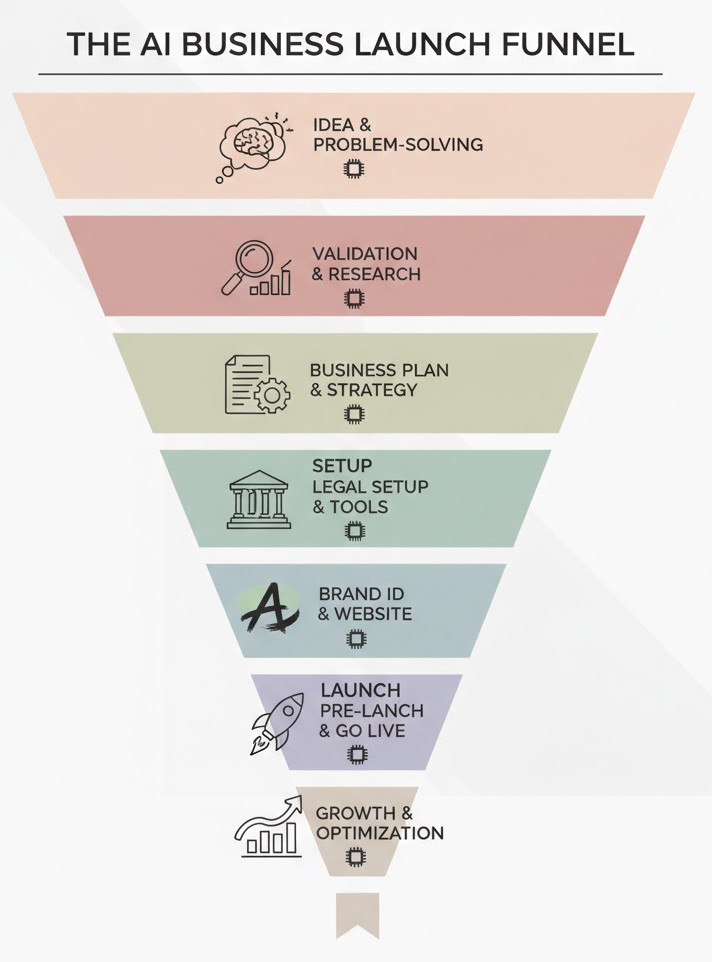
Phase 1: Foundation & Strategy — From Idea to Validation
Every successful business starts with an idea, but not all ideas are worth pursuing. What separates the viable from the vague is validation. AI can now assist with both, helping you find data-backed confidence in your concept.
Step 1: Find a Business Idea
Your idea doesn’t have to be revolutionary. It just needs to solve a real problem for a specific audience. Start by exploring areas you’re passionate about or industries where you have experience. Then, look for gaps in how products or services are currently delivered.
AI can significantly accelerate this stage. Tools like ChatGPT, Notion AI, and Copy.ai can brainstorm product or service concepts based on target keywords, demographics, or pain points. You can even use trend-tracking platforms like Exploding Topics or Google Trends to identify emerging markets.
Imagine you’re considering launching a digital wellness app. Instead of guessing demand, you could use Feedly AI to analyze recent discussions in tech and health communities, or MonkeyLearn to run sentiment analysis on app reviews, helping you identify what users like or dislike in existing products.
AI turns abstract inspiration into data-driven ideation, giving your idea a solid foundation from day one.
Step 2: Validate Your Product Idea
Validation ensures your business solves a problem people are actually willing to pay for. Traditionally, this involved surveys, focus groups, and months of market testing. Now, AI allows you to run lightweight validation in days.
You can use ChatGPT Advanced Data Analysis or Typeform AI to draft and analyze survey responses automatically. Platforms like Pollfish and Askable help you target real audiences, while AI-powered tools like AIPRM or Perplexity AI summarize competitor feedback to highlight unmet customer needs.
For example, if you’re testing a niche eco-friendly cleaning product, AI can analyze Reddit discussions and Amazon reviews to reveal what customers think about sustainability, packaging, and price points. This kind of insight transforms intuition into measurable opportunity.
Step 3: Write a Smart Business Plan
A business plan provides structure. It outlines your mission, market, pricing, and operational roadmap and AI can help you write one in hours instead of weeks.
Tools such as Upmetrics, LivePlan, and Notion AI templates guide you through business planning with editable frameworks. You can also use generative AI to create drafts for executive summaries, financial forecasts, and competitor analyses.
However, AI isn’t meant to replace your judgment. It’s a starting point for strategic thinking. Review, refine, and adapt AI-generated sections with your voice and vision. That combination of automation and human insight produces a plan that’s both efficient and authentic.
Step 4: Choose a Business Structure
Choosing the right legal structure — sole proprietorship, LLC, or corporation — affects how you’ll pay taxes, manage liability, and attract investors. Legal setup is often intimidating for first-time founders, but AI tools now make the process easier.
Services like LegalZoom AI, Clerk, or Harvey.ai can generate document drafts, summarize government regulations, and help you understand compliance requirements based on your region and industry. This doesn’t replace professional legal advice, but it saves significant time in preparation and research.
Step 5: Research Licenses and Regulations
Even online businesses must comply with local laws and digital regulations — especially around data privacy, advertising, and payments. AI-powered legal research assistants can identify which licenses apply to your business type and geography. For example, Harvey.ai or Casetext CoCounsel can interpret legal documents or summarize official guidelines.
By combining AI research tools with a legal consultant’s expertise, you can ensure full compliance while avoiding costly oversights.
Phase 2: Setup & Branding — Building Your Digital Presence
Once your concept is validated and legally defined, it’s time to build your brand and create a space where customers can find you. From logo design to website setup, AI streamlines this creative process while keeping costs low.
Step 6: Build Your Brand Identity
A strong brand identity creates recognition and trust. It includes your logo, color scheme, typography, and tone of voice.
AI tools like Looka, LogoAI, and Canva Magic Studio can generate multiple logo and branding concepts in seconds. Pair these visuals with AI writing tools such as Jasper, Writesonic, or ChatGPT to develop your brand story, tagline, and key messaging.
For example, an AI-assisted tagline might shift your pitch from “Affordable skincare products” to something more emotionally resonant, such as “Science-driven skincare for real-world skin.” AI helps you articulate what makes your business unique — a vital step in standing out online.
Step 7: Build Your Website or Storefront
Your website is your digital headquarters. Whether you’re selling physical goods, offering services, or publishing content, it needs to look professional and function seamlessly.
AI website builders like Wix ADI, Shopify Magic, and Durable.co can create tailored designs, product descriptions, and layout suggestions based on your business niche. You can also integrate Frase, SurferSEO, or NeuronWriter for SEO optimization — helping your site rank higher and attract organic traffic faster.
Importantly, AI-generated content should always be reviewed and edited to match your brand’s tone. Think of AI as your assistant, not your replacement — it handles structure and efficiency, while you bring the authenticity.
Step 8: Select Your Tools and Automate Early
Running an online business involves juggling multiple tasks — from customer service to marketing and accounting. AI-based tools now automate much of that workload, freeing you to focus on growth and strategy.
| Function | Example Tools | Benefit |
|---|---|---|
| Marketing Automation | HubSpot, ActiveCampaign, ManyChat | Personalized, automated campaigns |
| Customer Support | Intercom Fin, Tidio, Zendesk AI | 24/7 chatbot and support workflows |
| Analytics | Google Analytics Insights, Pecan AI | Predictive performance insights |
| Accounting | QuickBooks AI, FreshBooks | Smart bookkeeping and expense tracking |
| Creative Content | Canva AI, Runway ML, Synthesia | Visuals, videos, and copy generation |
Even small teams can now operate with the efficiency of large organizations thanks to automation. It’s the reason many modern startups stay lean but scale fast.
Phase 3: Launch & Growth — From First Customer to Expansion
After setup, it’s time to go live. This phase is about attracting, serving, and retaining customers. AI-driven analytics and automation give you the agility to test, learn, and scale.
Step 9: Prepare a Pre-Launch Marketing Strategy
Your pre-launch strategy builds anticipation and helps you collect early feedback. AI can help identify your target audience and plan campaigns that resonate.
Tools like Buffer AI, Hootsuite AI, and Mailchimp AI can analyze engagement trends and schedule posts for maximum impact. You can also use ChatGPT to generate pre-launch content such as blog posts, email sequences, or ad copy variations — and test which tone or message performs best.
Interactive AI-driven campaigns, like quizzes or waitlist sign-ups, can help you gather valuable data about early users before launch day.
Step 10: Launch and Optimize in Real Time
When you go live, every click and conversion provides insight. AI systems can analyze these interactions instantly, adjusting your marketing spend, pricing, or recommendations in real time.
For example, Shopify Magic Reports can suggest inventory adjustments based on customer behavior, while Google Ads Smart Campaigns automatically optimize ad placements to improve ROI. You can A/B test headlines, visuals, and CTAs using AI-based platforms that track performance metrics continuously.
The faster you analyze and adapt, the more competitive your business becomes — and AI makes that speed possible.
Step 11: Deliver Smart Customer Support
Customer support defines retention. AI chatbots like Zendesk AI and Intercom Fin can handle FAQs, troubleshoot issues, and escalate complex requests to human agents when needed.
This ensures that customers receive consistent, around-the-clock assistance — even if you’re a solo founder. As these systems learn from every interaction, they improve their accuracy and tone, creating a seamless user experience that builds loyalty.
AI support systems also gather valuable data. They can identify recurring issues, product feedback trends, or feature requests — insights you can use to improve your offering.
Step 12: Analyze, Adapt, and Scale
After launch, data becomes your most valuable asset. AI analytics tools not only collect it but also interpret it. Platforms like Tableau AI, Amplitude, and Google Analytics Insights highlight why certain campaigns or products succeed and predict future trends based on current behavior.
For example, predictive analytics might show that customers who buy one product are likely to purchase another within 30 days — allowing you to design targeted upsell or cross-sell campaigns automatically.
Scaling your business also involves exploring new markets. AI-powered localization tools like DeepL Write or Weglot Translate enable you to expand internationally with accurate translations and localized messaging, widening your reach without massive overhead.
Why AI-Driven Online Businesses Thrive
AI has fundamentally changed what it means to be an entrepreneur. It lowers barriers to entry, accelerates execution, and enables one-person operations to compete with established brands. Automation reduces operational costs, intelligent analytics improve decision-making, and personalization drives higher engagement.
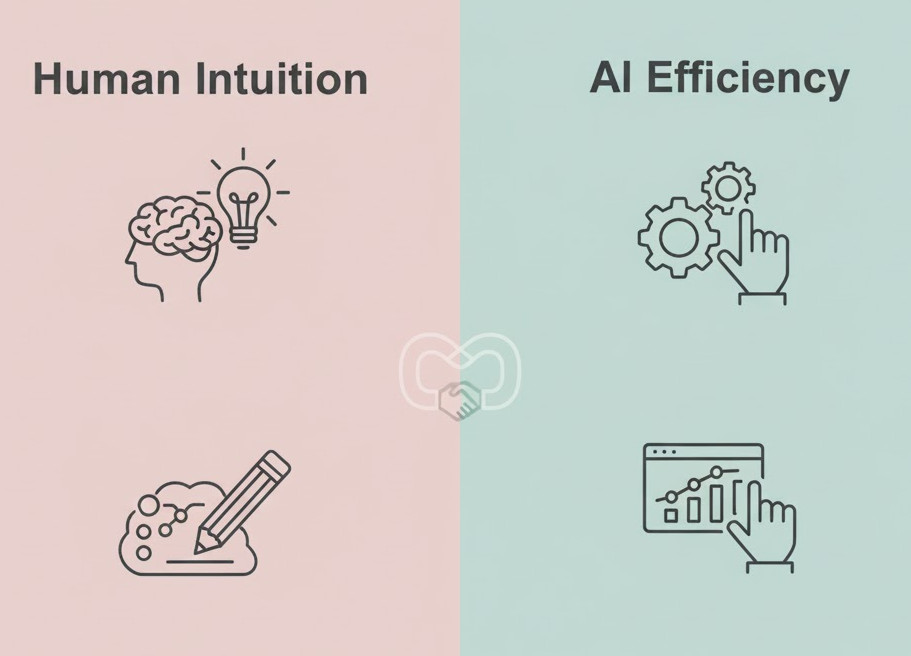
Beyond efficiency, AI brings creativity. It helps you discover new opportunities, test innovative business models, and continuously refine your offering. The combination of human intuition and machine intelligence creates businesses that are adaptive, customer-centric, and resilient.
Start Where You Are
The most important step is the first one. You don’t need to master every tool or automate every process at once. Start with a clear idea, validate it with data, and take small steps toward building your brand and community.
Use AI as your partner — a force multiplier that enhances your creativity, productivity, and strategic insight. The future of online business belongs to those who combine innovation with intelligent systems.
Your blueprint is ready. The next move is yours.